Electrical Test Tag Compliance in NZ: What AS/NZS 3760:2022 Actually Requires
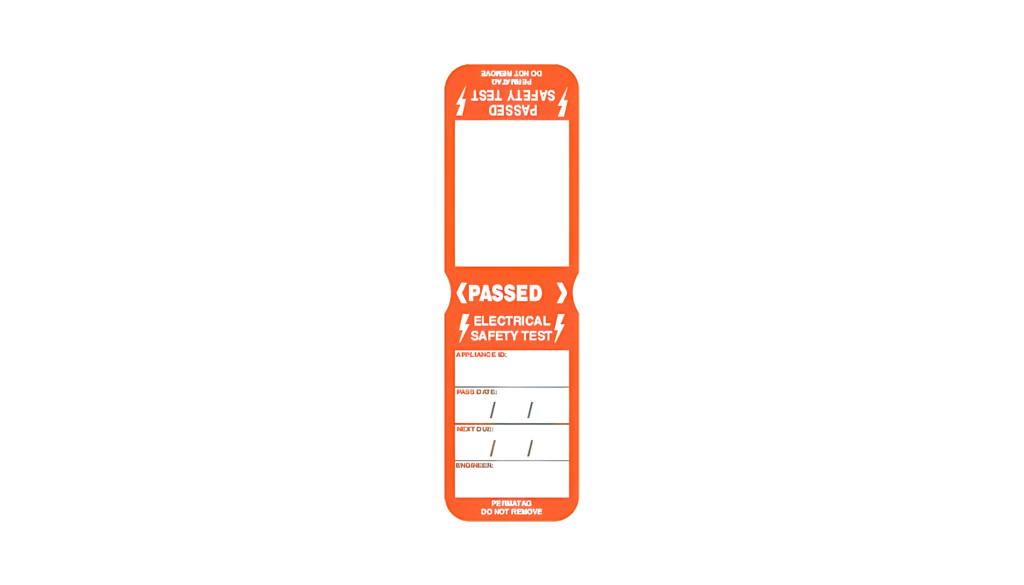
Under AS/NZS 3760:2022, every electrical test tag in a New Zealand workplace must show four things: the tester’s name, the testing entity, the test date with a full retest date, and a reference to AS/NZS 3760. The tag itself must be durable, legible, non-reusable, and non-metallic. The standard also requires that a register of all tested equipment be maintained, and recommends that actual test values — not just pass/fail results — be recorded.
Many tags and digital testing platforms across New Zealand fail to meet even the mandatory tag requirements, raising serious questions about whether the equipment was genuinely tested by a competent person or simply scanned and marked “pass.”
We’re seeing a worrying trend of ‘test and tag apps’ being used to either carry out testing improperly — skipping critical steps or taking shortcuts — or, in the worst cases, to fabricate test results entirely.
What Must a Compliant Electrical Test Tag Include Under AS/NZS 3760:2022?
Clause 2.5.2.1 of the standard is clear about what a compliant test tag must include, at minimum:
- The name of the person and entity who performed the test
- The test or inspection date
- A retest date
- A reference to AS/NZS 3760
If your tags are missing any of these four items, they are non-compliant — full stop. If a tag has only the month of the test that is not a date – this would be considered non-compliant.
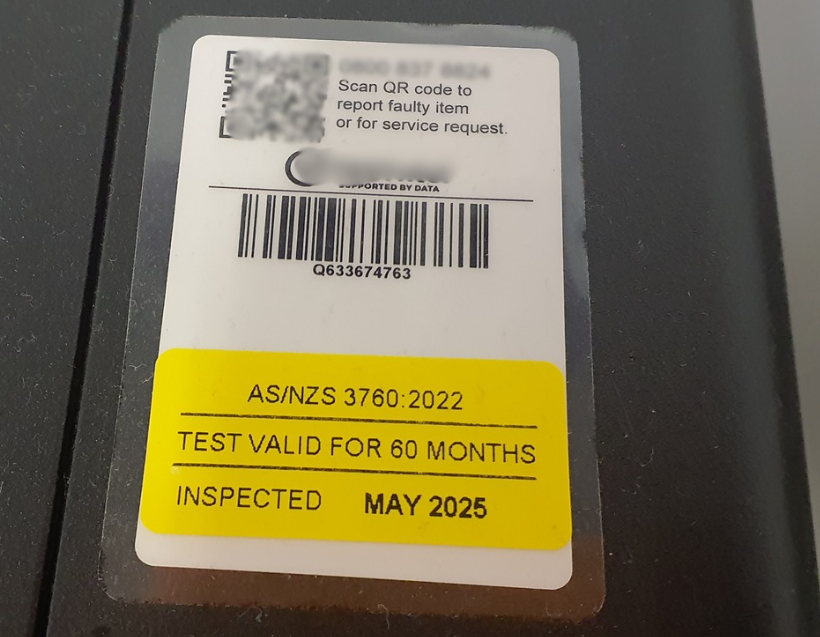
Here is an example from a test and tag company who are using non complaint tags.
- There is no indication of who has done the testing on the tag.
- There isn’t a full date on the tag. A month and year alone is not a date.
This tag could be applied without testing actually being performed – easy to cut corners.
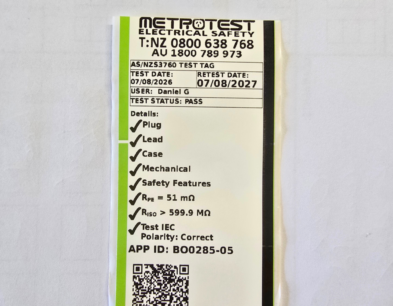
An example of a Metrotest tag
- It has a full test and retest date on the tag.
- The person who did the testing
- Pass status
- Full test details including numerical test values on the tag proof testing was actually performed.
What Must the Tag Be Made Of?
Under Clause 2.5.2, the tag must be durable, legible, non-reusable, and non-metallic. It may be colour coded to identify the period in which the test was performed. The standard also permits tags to carry a barcode or other code for electronic data collection, but this is in addition to — not a replacement for — the mandatory information listed above.
For example if the information was on the tag that just said ‘PASS’ with a QR Code, which retains all other information in an app, this would be non-compliant.
What Records Must Be Kept Alongside the Tag?
In New Zealand, Clause 2.6.1 requires (using mandatory “shall” language) that records of testing and inspection be kept along with a register of all equipment that is inspected and/or tested. A register is not optional — it is a compliance requirement.
On top of the register, Clause 2.6.1.1 sets out what those records ‘should’ contain as a minimum: earth continuity resistance, insulation resistance, leakage current, and visual inspection findings. Recording the numerical results is considered best practice.
If you are genuinely testing equipment, you are already getting these readings from your test instrument. Recording them is not extra work — it is simply writing down the numbers your tester is already showing you or even better – printing them on the tag itself.
Any competent person using a PAT tester will have these values in front of them at the point of test. The only reason not to record them is if you are not actually performing the tests correctly
This is exactly why recorded test values matter: they are the most straightforward proof that real testing took place. A register that only says “pass” gives a WorkSafe investigator nothing to verify. A register that shows an earth continuity reading of 0.12 Ω and an insulation resistance of 298 MΩ tells them a competent person had a test instrument connected to that piece of equipment and recorded what it showed.
Records should be retained for 7 years or such period as required by the relevant regulator (Clause 2.6.2). Electronic records are explicitly acceptable under the standard.
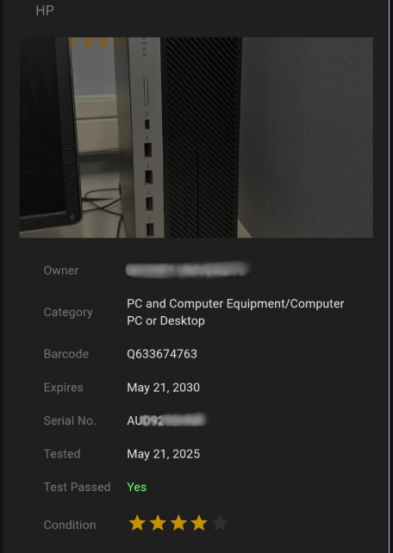
Matching the ID number when using the QR on the tag above, you can see there is a full test date on the application but still no indication of who performed the test. It would also be considered poor practice as a third-party provider to not add numerical values on the tag or the application. While there may be a tag on the appliance, can you know for sure it was actually tested?
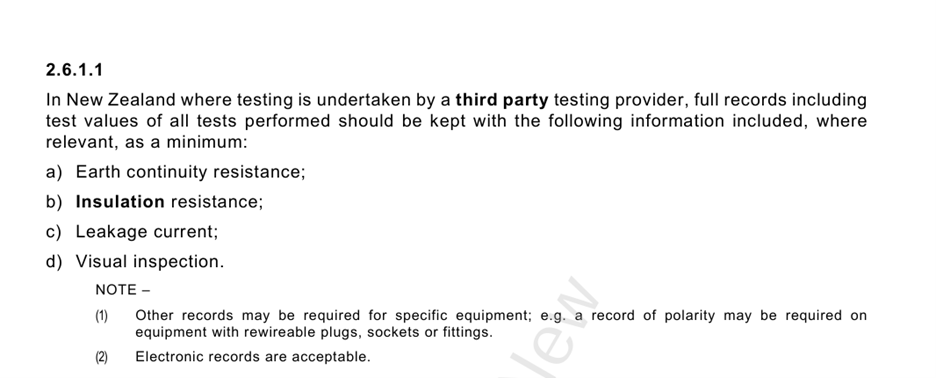
It is considered best practice for third-party providers to keep records with numerical results so if a company is performing testing without keeping those results it might be worth asking why? If it is best practice from the Standard itself, why would they not follow it?
Common Test Tag Compliance Failures in NZ Workplaces
What we’re finding in practice tells a different story from what the standard requires. Tags missing tester names. No full test dates, missing AS/NZS3760. Digital records that amount to little more than an asset database with “Test Passed: Yes” stamped on it. No recorded test readings. No accountability trail.
Can a Professional-Looking Testing App Still Be Compliant?
Yes, absolutely, but use caution. Some testing applications present a polished, professional-looking interface. You scan a tag, and up comes a clean record with the asset photo, barcode, test date, expiry, and a green “Pass.” It looks like compliance.
But look closer. Is the tester’s name recorded? Are the actual test results — earth continuity, insulation resistance — captured anywhere? Or is it just an inventory system with a pass/fail field bolted on?
A flashy app creates the appearance of a robust testing programme without necessarily delivering one. And that gap between appearance and reality is exactly where fraud can hide. Without recorded test readings or identified testers, there is no way to verify whether equipment was genuinely tested by a competent person — or whether someone simply scanned barcodes and ticked “pass” in bulk.
What Does a Properly Completed Test Tag Look Like?
A properly completed tag should show:
- The tester’s actual name (not “admin” or a generic name)
- The entity they work for
- The test date and a full retest date
- A reference to AS/NZS 3760
- Durable, non-reusable, non-metallic construction
- Ideally, a link back to detailed test records with actual readings in the register
How to Check Whether Your Test Tags Are Compliant
If you’re responsible for a workplace, or you’ve noticed suspect tags on equipment you use daily, ask these questions:
- Who tested this? If there’s no name on the tag, you can’t verify competency. (For privacy concerns, the company may use the initials of the person or a assigned technician name – however it should be still be able to be traced back to the actual competent person doing the testing).
- Where are the test results? A pass/fail status without recorded readings may satisfy the minimum, but it offers no way to verify that genuine testing occurred.
- Does the digital record match the physical tag? If neither has the required information, the system is just papering over a gap.
- Is the retest date actually on the tag? An expiry buried in an app that nobody checks is not the same as a visible date on the equipment.
- Is there a register of tested equipment? In New Zealand, this is mandatory. If your testing provider can’t produce one, that’s a compliance failure on its own.
- Would this survive a WorkSafe investigation? If someone were injured and the regulator pulled your records, would they find evidence of genuine testing — or just an expensive-looking database or inventory app.
Why Non-Compliant Test Tags Are a Workplace Safety Risk
Test and tag isn’t a box-ticking exercise. It exists because faulty electrical equipment that can cause serious harm. A non-compliant tag doesn’t just mean someone cut a corner on paperwork — it means there may be no reliable evidence that the equipment you’re plugging in every day is actually safe.
Got questions about testing requirements in your workplace or looking for a provider doing testing safely, correctly and compliantly, talk to Metrotest today.
Safe testing everyone.